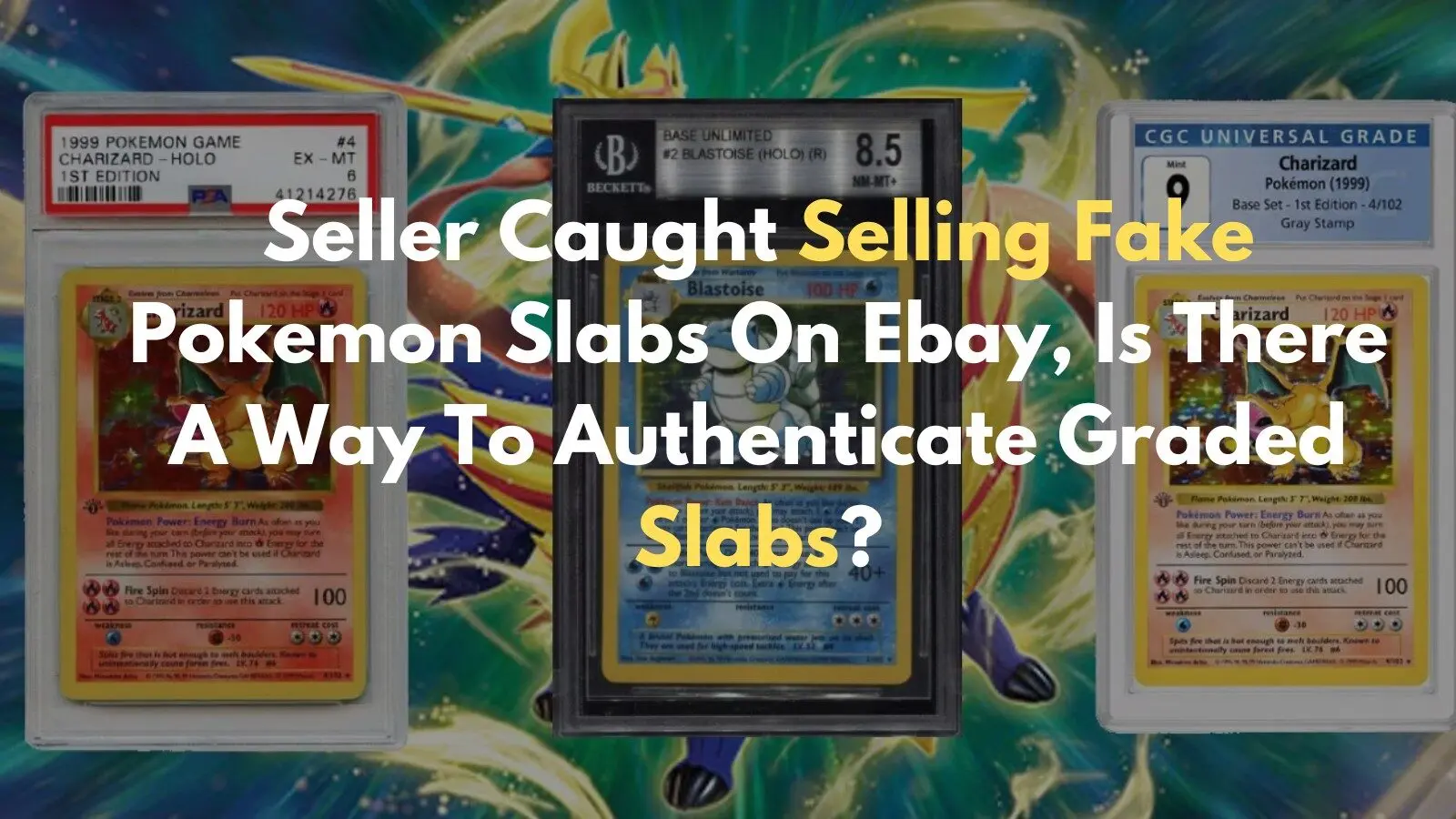
The thrill of collecting Pokémon cards has taken the world by storm, and with the latest special set prismatic evolutions, fans are excited to get their hands on the new cards.
However, this also means that fake PSA-graded cards are on the rise, targeting new collectors or those who are unaware of what a genuine PSA card looks like.
So, Is there a way to safeguard yourself from graded slab scams?
Well, yes! And these are some fool-proof ways you can follow to ensure that your slab is the real deal.
Checking The Company Grading Logo Of Your Pokemon Slab
With many Pokemon card deepfakes available in the market, many people have fallen victim to scams, and it’s essential to arm yourself with knowledge on how to spot a genuine graded card slab.
Slabs worth more than 1000 USD today have been spotted with fake listings on reputable sites such as eBay, and the scary thing is that some of these fake slabs are currently active on auctions today.
Hence, we’ve put together a set of examples to help you identify the real deal from the fakes. (For the sake of this example, we will be assuming slabs from PSA, which is arguably the most recognised grading company worldwide.)
The first thing to check is the embossed PSA logo on the bottom right of the slab, which is present on both the front and back of the slab.
Fake PSA cards do not have this embossed logo, and scammers still can’t replicate this simple yet effective deterrent. So, if you see a graded PSA card without this logo, it’s likely a fake.
An Off-looking Front Label May Be a Telltale Sign That Your Pokemon Graded Slab Is Fake

Source: Pexels
The front label of a PSA-graded card has several features that make it stand out. Fugitive Ink Graphic pattern is a unique feature that’s not easily noticeable, but it’s crucial in determining the authenticity of the slab.
Additionally, the classic PSA red trim is a small detail that’s easy to overlook, but it’s essential in verifying the slab’s authenticity.
This can also be applied to slabs from other companies such as CGC, SGC and BGS as they all share similar front labels to differentiate between fake and real slabs, with slight differences in where they are located.
Furthermore, inspecting the fonts of the card label on the front for all graded slabs is usually the first thing that people inspect to spot between a fake and an authentic slab.
Unlike their counterparts, fake slabs have different text fonts than authentic slabs as scammers often fail to find the exact text fonts that the grading company uses for each of their slabs.
Inspecting the Back Label Of Your Pokemon Slab Under A What Now??
The back label of the card has the same features as the front, except for two things. The UV Logo Pattern of the PSA’s Logo is an upgraded security measure that illuminates to reveal additional smaller PSA logos on the back label when aimed at a light source.
It might seem simple at first, but identifying the logo pattern of the slab is more trickier than you think. The logo cannot be viewed under normal lighting, and can only be viewed under certain coloured lights such as blue.
To find products with blue light display, you can get them at your e-commerce site with thorough research.
Secondly, QR Code is another feature that’s often hijacked by criminals, but it’s still an essential part of the slab’s authenticity. Remember to always check the legitimacy of the QR code of your slab, if it works you’re good to go.
Another issue we would want to highlight is the serial number of your graded slab. Whether you’ve chosen to grade under PSA, CGC, SGC or BGC, all graded slabs come with their very own unique set of serial number codes.
In order to check the serial number of your slab, look for a sticker or label on the underside or side of the slab, usually near the edge, where the serial number should be printed clearly and run through the company’s database on the card’s details.
An Overly Cheap Graded Slab Is Usually Too Good To Be True… Especially For Pokemon TCG
When it comes to buying a PSA-graded card, the price is often a giveaway.
If a listing seems too good to be true, it probably is. Don’t be tempted by cheap prices, and always listen to your gut feeling.
Recently, a seller was caught selling a fake PSA 10 of Gengar VMAX from the Fusion Strike set, a deal that seemed too good to be true.
Why You Should Not Fully Trust In Grading Companies: CGC Authenticate Pokemon Fake Cards
In June 2024, a shocking discovery sent chaos among the Pokemon Collecting Community.
The use of special forensic techniques showed that hidden watermarks on the cards graded by the grading company CGC were revealed to be fabricated to encode the printer’s serial number.
At the centre of the controversy is CGC Cards, the authentication service that graded and authenticated the fake prototype cards.
CGC company has yet to make an official statement but silence from the company has raised eyebrows, with many calling for transparency and accountability.
As the situation unfolds, collectors are being advised to pause any sales of affected cards until the investigation is complete. The implications of this scandal are far-reaching, and it’s clear that the Pokémon TCG community will never be the same.
It Is Important To Always Have A Second Opinion When It Comes To Purchasing Pokemon Slabs
Source: Pexels
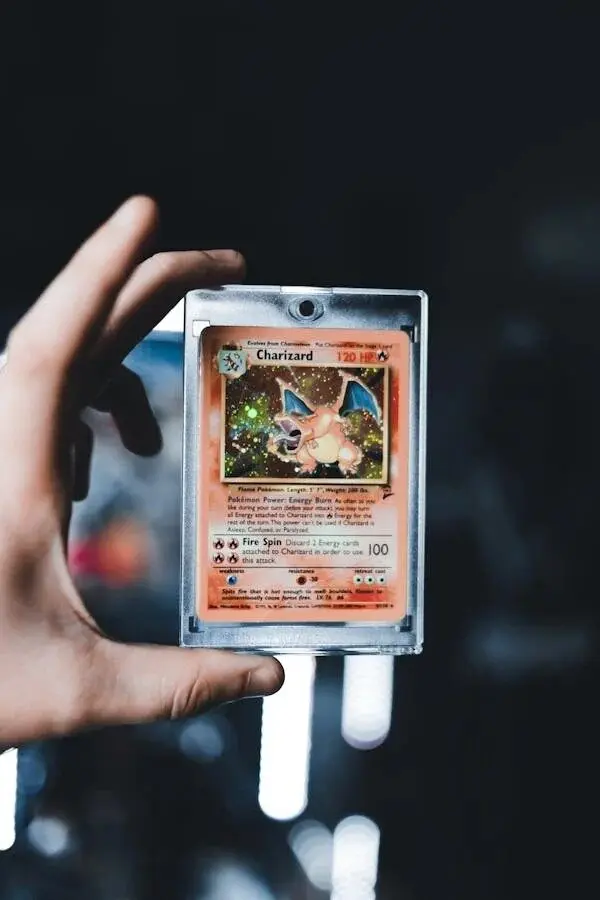
Collecting PSA-graded slabs can be a rewarding and exciting hobby, but it’s crucial to stay vigilant and informed. With the right knowledge, you can avoid falling victim to scams and enjoy your collection with confidence.
When dealing with rare and expensive PSA-graded slabs, it never hurts to bring an experienced collector along.
Always inspect the slab closely and verify the authenticity of the labels before making a purchase. And remember, if a seller refuses to let you examine the slab, it’s a major red flag.
Stay safe, and happy collecting!
Related To Pokemon:
Determining The Prices Of Pokemon Singles: Is It That Really That Simple?