The Pokémon trading card market has been booming over the past few years, with rare cards selling for thousands of dollars.
With recent releases of Surging Sparks, Prismatic Evolutions and the future team rocket set, the trading card game has certainly gained my attention from fans and non-fans alike.
However, with the recent introduction of base 10% tariffs on all countries by the Trump administration, collectors and investors are worried about the future of the market.
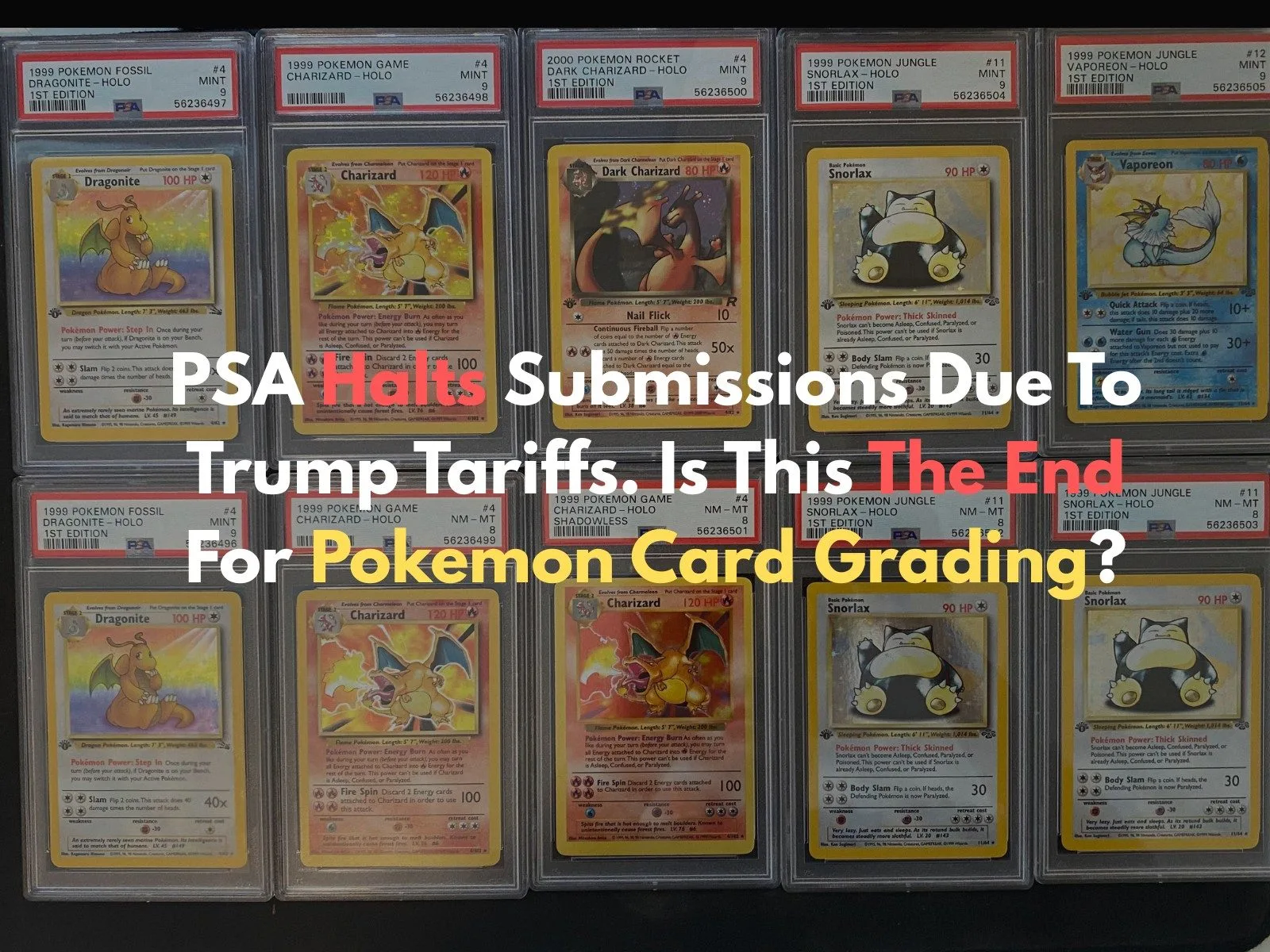
One major player, PSA, has already taken the drastic measure of pausing card grading submissions from outside the US. 🤑
Could this be the end of Pokemon grading, or is there a silver lining we need to understand?
How The Impact Of Tariffs Affects Pokémon Card Grading
PSA’s decision to stop accepting international submissions is a direct response to the significant tariff expenses that would be incurred by sending high-value cards to the US for grading.
According to PSA, the tariffs are against the value of the items in the order, rather than on the PSA service fee. This means that sending a $5,000 Pokémon card to PSA would result in a $500 fee, making it prohibitively expensive for international collectors.
The move is likely to have a significant impact on the Pokémon market, which relies heavily on card grading to determine the value and authenticity of rare cards.
Without access to PSA’s grading services, international collectors may be forced to look elsewhere, potentially leading to a fragmentation of the market.
Moreover, the tariffs could lead to a decline in the value of Pokémon cards, as collectors become wary of investing in a market that is increasingly uncertain.
The Underlying Reason Behind PSA’s Decision
PSA’s decision to pause international submissions is a reluctant one, driven by a desire to protect its international customers from significant tariff expenses.
The company notes that it will leverage available means to limit tariff exposure for customers outside of the US. This may include finding alternative shipping routes or exploring other options for grading services.
However, it is unclear at this stage how effective these measures will be in mitigating the impact of the tariffs.
Tariffs: A Threat To the Global Pokémon Community
The introduction of tariffs is a threat not just to the Pokémon market but to the global community of collectors and enthusiasts.
For many, Pokémon is more than just a hobby – it’s a way of life. The introduction of tariffs threatens to disrupt this community, making it harder for collectors to access the resources and services they need.
Furthermore, the tariffs could lead to a decline in the overall value of Pokémon cards, potentially making it harder for new collectors to enter the market.
Immediate Consequences of PSA’s Decision Creates Frenzy
PSA’s decision to pause international submissions will have immediate consequences for collectors and investors.
Cards that are currently at or in transit to PSA’s facilities may still be subject to tariffs and may also face additional charges upon return.
This means that collectors who have already submitted their cards for grading may face unexpected expenses, potentially leading to a decline in the value of their investment.
The future of Pokémon card grading is uncertain, with many collectors and investors worried about the impact of tariffs on the market.
While PSA has paused international submissions, it is unclear whether other grading services will follow suit.
If they do, it could lead to a significant decline in the value of Pokémon cards, potentially making it harder for collectors to sell their cards.
Will The Prices Of Rare Pokémon Cards Be Affected?
Source: Pexels
The tariffs are likely to have a disproportionate impact on rare Pokémon cards, which are often the most valuable and sought-after cards in the market.
Without access to PSA’s grading services, collectors may struggle to determine the authenticity and value of these cards, potentially leading to a decline in their value.
Moreover, the tariffs could make it harder for collectors to acquire rare cards, potentially leading to a decline in the overall availability of these cards.
A Mixed Response From The Pokémon Community

Source: Pexels
The Pokémon community has been quick to respond to PSA’s decision, with many collectors and investors expressing their concerns about the impact of tariffs on the market. 4
On social media, collectors are sharing their concerns and discussing potential alternatives to PSA’s grading services.
While some are calling for PSA to reconsider its decision, others are exploring alternative options for grading and authenticating their cards.
Broader Implications Of Tariffs On The Pokémon Market
The introduction of tariffs has broader implications for the Pokémon market, going beyond just the issue of card grading. Tariffs could lead to a decline in the overall value of Pokémon cards, potentially making it harder for collectors to sell their cards.
Additionally, the tariffs could lead to a decline in the number of new collectors entering the market, potentially leading to a decline in the overall size of the market.
Although the future of Pokémon card grading is uncertain, and it remains to be seen how the market will respond to the introduction of tariffs.
One thing is clear, however – the Pokémon community will need to adapt quickly to the changing circumstances if it is to survive.
Related To Pokemon:
Determining The Prices Of Pokemon Singles: Is It That Really That Simple?